SETI Institute ASSET Program
Cathrine Prenot Fox
I have always been fascinated by the curious sequences of events that form history. Take the telescope. A spectacle maker named Hans Lippershey (the spelling of his last name is a matter of some quite passionate debate) ground some lenses, put them into a tube, and pointed that instrument some distance away. Voila! Long distance sight! Lippershey traveled to The Hague to meet Prince Maurice of the Netherlands and presented the instrument to the government. He applied for a patent on this instrument in 1608... ...and was denied. They were too easy to build.
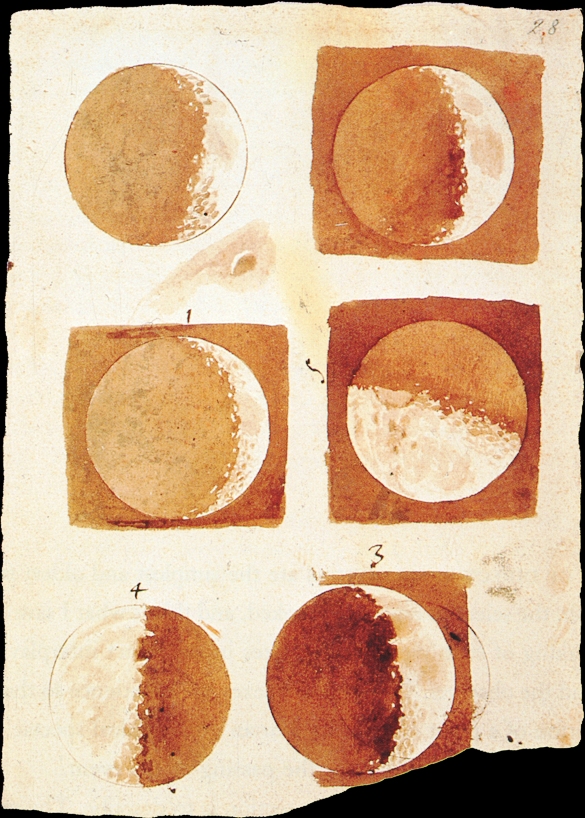 |
| Galileo Moon Phases from here. |
And then? Galileo turned the scope to the heavens. In one year, 1610, he discovered the four large moons of Jupiter, spots on the sun, craters on the moon, the phases of Venus (forever dashing the hopes of those with a geocentric view of the solar system) and countless stars beyond the naked eye.
 |
| Io, Europa, Ganymede, and Callisto from here. |
 |
| Adventures in Astrobiology. Cathrine Prenot Fox, 2012. |
It is difficult to capture the enormity and loveliness of the Hubble Space images in a cartoon. This telescope has been orbiting earth since its launch in 1990 and there are thousands of astoundingly beautiful views of our universe. Stars, nebulae, supernovas, and distant galaxies abound at the Hubble Site, and I hope you will take a moment (or a month) to peruse some truly amazing pictures.
 |
| Carina Nebula from here. |
Until our next adventure,
Cat
 |
| Investigating the visible spectrum at the SETI Institute. |

No comments:
Post a Comment